
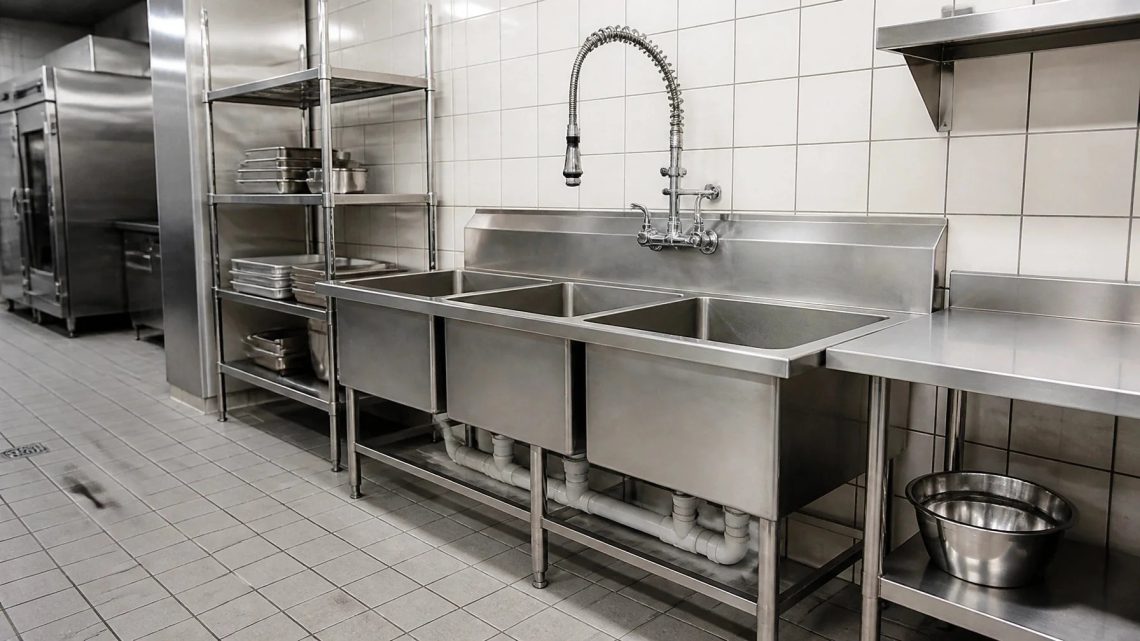
Choosing the right commercial sink is essential for maintaining efficiency and hygiene in professional kitchens. These sinks are designed to handle heavy-duty use, accommodate large volumes of water, and meet strict sanitation standards. Understanding the various types, materials, sizes, and features will help kitchen managers select a sink that supports smooth operations while complying with health regulations.
Commercial sinks come in several configurations depending on their intended purpose. Single-compartment sinks are suitable for tasks requiring ample space such as washing large pots or pans. Double-compartment sinks allow for multitasking by separating washing and rinsing processes. Three-compartment sinks are common in many professional kitchens because they facilitate a complete cleaning cycle: washing, rinsing, and sanitizing. Each compartment typically has its own faucet to maximize workflow efficiency.
Material selection significantly affects durability and maintenance requirements. Stainless steel is the most popular choice due to its resistance to corrosion, ease of cleaning, and ability to withstand high temperatures. It also resists staining from food acids or chemicals commonly used in kitchens. Some commercial sinks may feature galvanized steel or cast iron with enamel coatings; however, these options tend to be less durable under constant heavy use compared to stainless steel.
Size matters when selecting a Commercial Sink because it influences how well it fits into existing kitchen layouts without disrupting workflow. The basin’s depth should be sufficient to prevent splashing but not so deep that reaching inside becomes difficult or unsafe for staff members. Widths vary widely based on available space but generally range from 18 inches up to 36 inches per compartment.
Additional features can enhance functionality depending on specific kitchen needs. Drainboards attached at one or both ends provide convenient areas for drying dishes or prepping ingredients near the sink station itself rather than occupying counter space elsewhere. Integrated splash guards help contain water within the sink area reducing messes on floors which improves safety conditions by preventing slips.
Proper installation is crucial for ensuring compliance with local plumbing codes as well as food safety standards set by regulatory agencies like the FDA or local health departments. Professional installation guarantees that drains connect correctly with grease traps if required since improper drainage can lead to clogs affecting overall sanitation efforts.
Regular maintenance extends the lifespan of a commercial sink while preserving hygienic conditions vital in busy kitchens where contamination risks must be minimized at all times through thorough cleaning routines after each shift along with periodic inspections checking seals around faucets and basins remain intact without leaks developing over time.